Reviews by Alison (24)

Ian McEwan, always a class act

What We Can Know

Set in two centuries, partly around 2014 and then in 2119 when what happened has happened, climate change and a catastrophic tsunami drown much of the UK and Europe. Basically a love story set in academia, a famous poet writes a poem for his wife, he reads it out at her birthday and she receives the only copy which is then lost. So come 2119 an academic is searching for the lost poem and McEwan treats us to a twist in the tale. Thus the story is about our destroyed world and also a love story and a mystery. He leaves us to our own imagination - perhaps the most powerful way to get across what is happening to our world. I would have loved more detail but this is not a literal account but an elegiac story from a writer with a great command of ideas and language.
Human interest, easy read

The Barbecue at No. 9

Twenty families live in a close - a cul de sac. One family arranges a barbecue for everyone on the day of the big Live Aid concert in 1985. The story plays out over this long day as we get to know a few key families and the secret dramas playing out behind the scenes. A murder, a pregnancy and a bankruptcy among other everyday dramas are revealed during the course of the day. Godfrey tells a good story, part mystery, part human interest, part snippets about life in the 1980’s. She tells the story with empathy and humour and it is a good light read probably similar to Jojo Moyes.

Not enough ice cream

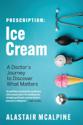
Prescription: Ice Cream

I found the first half a wee bit bland, and I suspect that other doctors have done it more engagingly. But in the second half of the book he delves into his alcoholism, the way that it started, the way in which it gained pace and the point at which he quit. He is open about the awfulness of it and I found this disarmingly honest account fascinating. So for me it was overall worth reading. Not much about ice cream though!

Good and bad

Exit wounds

I started this book with great enthusiasm, impressed by his erudition - the classical, historical, political and literary references - and his vast vocabulary. I mean, whoever heard of the verb to latibulate? (To hide in a safe corner until conditions improve. Maybe what we all should be doing.) There is no particular story line, he relates bits of his life around the time when his marriage to the redoubtable Georgina was failing and his even more redoubtable mother was in hospital maybe dying and I began to find the tedium relieved only by his sense of humour plus of course the erudition and the vocab. So the book was never finished, however, having picked it up again just now perhaps I regret it. His description of the aged prostitute in the same ward as his mother is poignant and funny. Mmmm, another time.

1 2 ... 5